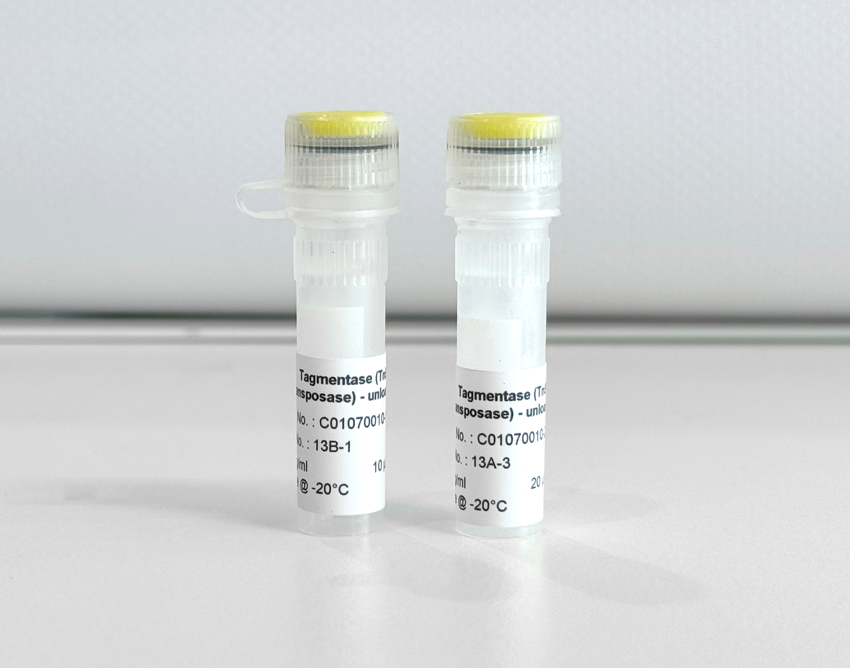
Tn5-Duplex-Sequencing (Tn5-Duplex-Seq) for low-input single-molecule variant detection
Shao, Diane et al.
DNA mutations are the inevitable consequences of errors that arise during replication-repair of DNA damage as well as aging and disease progression. Because of their random and infrequent occurrence, quantification, and characterization of DNA mutations in the genome of somatic cells have been difficult. These mutations in DNA drive genetic diversity, alter gene function, define evolutionary trajectories, and provide targets for precision medicine and diagnostics. It is crucial to detect mutations across a wide range of abundance, i.e., variant allele frequency (VAF). Detecting low-abundance mutations (e.g., <0.1–1% VAF or in individual cells) is important for understanding human embryonic development, somatic mosaicism, and clonal hematopoiesis and uncovering pathogenic variants. Altogether somatic mutations provide important and unique insights into the biology of complex diseases. To decipher the causal inference, we must build robust genetic maps of somatic evolution in health and disease. The recent advent of duplex consensus sequencing has heralded a new generation of accuracy. However, multiple techniques focus on targeted areas of the genome (Twin Strand Biosciences) or are limited to restriction sites (Nanoseq), limiting their application to comprehensive somatic variant characterization. Furthermore, fragmentation of the genome and standard A-tailing and ligation creates errors (BotseqS, CODEC). Ligation of duplex strands for efficient sequencing has proven promising, though in practice requires complex molecular structures (Pro-Seq, CODEC) which have been observed to frequently result in incorrectly paired duplexes (CODEC). To enable comprehensive variant detection by next-generation DNA sequencing, we propose an innovative, accessible, and highly accurate Tn5 transposase-based duplex-sequencing technology (Tn5-duplex-seq) where complementary strands of DNA could be labeled at the molecular level in a single-tube reaction; thus, identifying single nucleotide variants (SNVs) from single-molecules of DNA regardless of starting from single cells or pooled cell/DNA input. The conceptual basis of the protocol comes from META-CS (Xing et al.2021), a Tn5 based aproach optimized for single-cell whole genome amplification. We find that modifications of this approach to include flexible input and the sequencing strategy to optimize cost per variant detection enables great flexibility for all low-input applications.
Tn5-duplex-seq approach offers several benefits over other duplex approaches including.
(1) preservation of original template molecules by utilizing 16 unique sequences (Compared to the loss of 50% of molecules due to intramolecular symmetry during TN5-based Nextera library preparation)
(2) accuracy by eliminating the requirement for A-tailing
(3) efficiency of duplex capture through specifying input
(4) accessibility by using standard reagents and oligonucleotide preparations
(5) distinction between double-stranded SNVs and single-stranded lesions.
Our method enables library preparation for short-read sequencing. Downstream analysis enables accurate and high-throughput SNV/indel and copy number analysis.